

A TASTE OF FIVE – RACHEL SIGNER
28/08/2026
07/06/2026
Elopement used to be done in utmost secrecy.
Two people running away.
A rushed ceremony.
A decision made before anyone had time to object.
Today, eloping has become much more diverse, intentional and personal.
Eloping is defined as secretly running away, often with a lover, to get married. The meaning of the word has shifted over time. In our current age of hyperindividualism, elopement means a small, intimate wedding. It intentionally focuses on the couple, making their connection the main priority. The goal is often to remove traditional guest obligations and stress.
A shifting definition
Some couples elope because they wish to avoid parental disapproval or religious objections. Others want a wedding that feels lighter, freer, or more private. Or simply a day that people will remember for the right reasons. Eloping can mean two people at city hall or a symbolic ceremony at a peaceful location. It can also be a destination wedding with international guests at a grand venue.
These days, elopements focus more on the couple and less on outside expectations. Couples can choose a simple marriage at city hall, a spiritual ceremony in a peaceful spot or a destination wedding. They might enjoy an unforgettable lunch or dinner with close family and friends. The location makes the experience even better.
The key idea is intention. A wedding can be small, symbolic, civil or religious, or part of a trip abroad. Cities and countries often don’t include “elopement” in their official statistics. They count marriages, civil ceremonies, religious weddings, foreign spouses, non-resident couples or destination weddings. To get a real picture, the numbers have to be read carefully.
At the same time, it is clear that eloping is “hot”. More couples are seeking alternatives to traditional weddings. Some are ready to travel overseas for their special day.
In this context, Las Vegas is still the classic reference point. It remains the global capital of fast and flexible wedding culture: chapels, entertainment, pop culture, luxury hotels, low-budget motels, neon signs and an entire city built around speed and choice.
Las Vegas has a high-octane energy, a neon aesthetic, and an assembly-line efficiency that is not every couple’s cup of tea. Still, the city deserves a place in any elopement article, because it set the basis for the modern idea of the fast wedding.
Everyone can picture the classic scenes: chapels, neon lights, hotels, Elvis, drive-through ceremonies and late-night options. Here, a wedding can happen without months of planning.
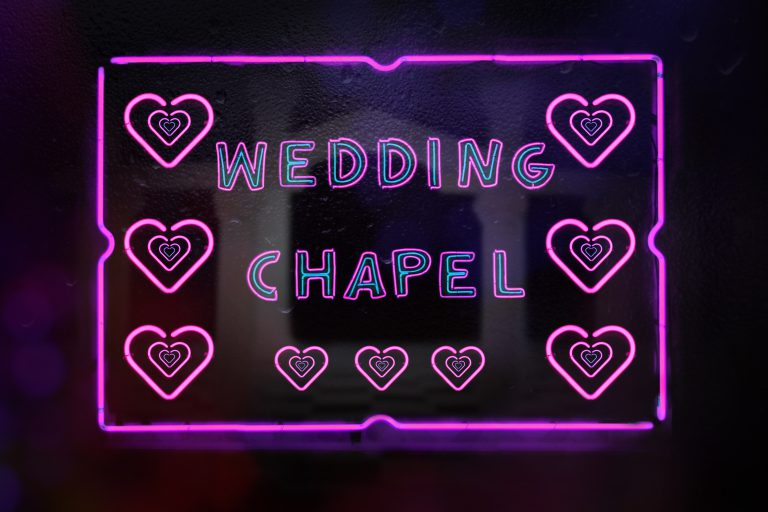
Chapels, neon, speed and choice: Las Vegas made the fast wedding part of popular imagination.
The numbers are massive. In 2024, the Clark County Clerk’s Office recorded 75.324 marriages in Las Vegas, as noted by Guinness World Records. That makes Las Vegas the volume giant.
Las Vegas highlights the classic quick-wedding culture. It doesn’t need to define contemporary elopements because it serves as a benchmark. It shows that couples have always sought alternatives to traditional weddings. They want shorter routes, smaller ceremonies and less outside pressure. They also want a wedding that reflects their identity.
The city is powerful because it knows exactly what it is. It offers speed, spectacle and an industry built around weddings. For couples who want that “fast-food energy”, it can be perfect.
Best for: fast weddings, iconic elopement culture, playful ceremonies, and couples wanting the classic Vegas experience.
The planning reality: even a quick wedding works better when the couple has made clear choices about ceremony style, photography, dinner, clothes, timing and budget.
Yet high volume does not guarantee that Las Vegas is the best choice for every couple.
So, what do we look at?
For those seeking intimacy, slow food, and a rich blend of history and culture, other locations may be a better fit. We looked at eloping in relation to places where couples can combine romance, travel, food, atmosphere, and the unavoidable bureaucratic paperwork in a more personal way. Some places make the legal marriage easier. Other places make the celebration unforgettable. “The best” elopement destination depends on what a couple really needs. The following five places made our cut.
Getting married in Copenhagen is having a moment. From the outside, it looks simple: the majestic City Hall, clean water, romantic canals, bicycles rule the old streets, highly rated restaurants for a memorable dinner, iconic photos in the old town, unforgettable design, and the feeling that a wedding can be small and smart casual. The city has a calm kind of romance and attracts people from all over the world to get married. It has become the “Las Vegas of the North”, only with better pastries and more bureaucracy. Copenhagen may be one of the clearest examples of the contemporary international elopement city. It is practical and unusually experienced in working with foreign couples.

Legal clarity, city hall romance, unforgettable food and drinks after the ceremony. Relaxed clothing style and attitude are more than enough.
The official Copenhagen Wedding Office says the city performs over 7.000 weddings every year for Danish and international couples. A 2025 Associated Press report gave an even sharper picture:
around 8.000 wedding ceremonies were performed the previous year, with about 5.400 involving couples where neither partner was a Danish resident. This is why Copenhagen matters. It is more than a pretty city. It solves a real problem for international couples who may face complicated paperwork elsewhere. For some couples, Denmark becomes the place where the legal part finally feels possible.
A Copenhagen wedding can be very simple: ceremony, photos, wine, hotel, lunch or dinner. It can also be extended into a full wedding weekend with a few guests and a proper plan. Still, Copenhagen has enough atmosphere to create a memorable day.
Same-sex marriage is legal in Denmark, which makes Copenhagen a strong inclusive option for couples who meet the Danish marriage requirements. In fact, in 1989 Denmark was the first country in the world to establish the right for same-sex couples to enter into registered partnership.
Even a clean legal pathway still needs a solid foundation. Documents need to be checked. Dates need to work. Travel needs to line up with appointments. Witnesses, clothes, rings, photography, catering and guest communication still matter.
Best for: international couples, legal clarity, city hall weddings, stylish minimalism and intimate celebrations.
The planning reality: Copenhagen makes the legal route clearer, but the wedding day still needs a plan.
For couples looking at Denmark, this is exactly why we created The Copenhagen Edition of The Housewife Wedding Planner. It helps turn the legal wedding route into a complete plan, with the documents, timing, budget, dinner, guests and city details all in one system.
Planning a Copenhagen wedding?
Start with the city-specific guide created for couples planning a wedding in Denmark from abroad.
View The Copenhagen Edition
Rome is a different kind of elopement city. Copenhagen is a straight path. Rome gives couples golden light, food, churches, fountains, ruins, palazzi, family, aperitivo, old streets and cinematic photographs before the photographer has even started working. The city does not need much styling: it already knows how to look dramatic.
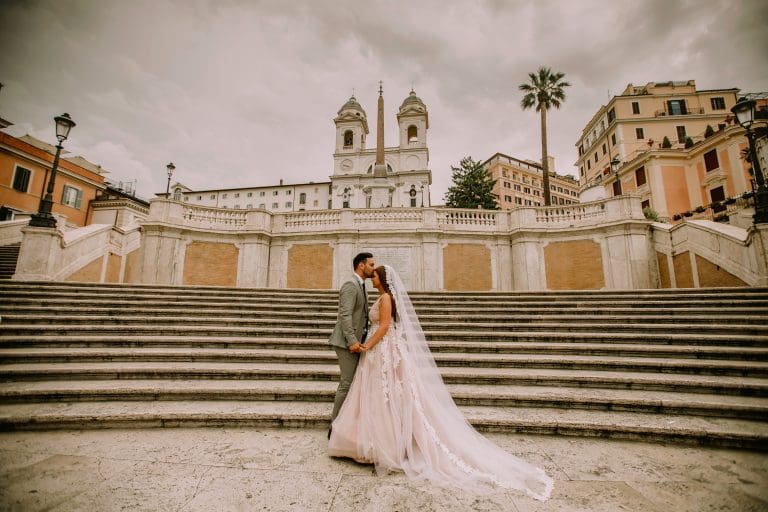
Golden light, old stones, fountains and a city that already knows how to look cinematic. Dress like you are a movie star.
The numbers show that Rome is a serious wedding city, although the picture is more mixed than Copenhagen. In 2024, Rome registered 6.440 marriages, including 2.038 religious marriages and 4.402 civil marriages. More than one in five marriages had at least one foreign spouse: 1.449 cases, equal to 22,5% of the total, according to the Roma Capitale statistical report. Those numbers are useful, but they need to be read honestly.
Rome is also layered and asks more from a couple. A marriage with one foreign spouse in Rome is not automatically a destination wedding. It may involve foreign residents, Italian-foreign couples, local couples, religious ceremonies, civil ceremonies and many different life situations. Rome’s wedding market is therefore more fragmented than Copenhagen’s international civil-wedding pathway. Rome’s strength is different.
Italy as a whole is one of the strongest destination wedding countries in the world. ENIT says Italy hosted over 15.100 weddings for international couples in 2024. ISTAT separately reported 3.378 marriages in 2024 between two foreign non-resident spouses, a category it connects directly to turismo matrimoniale, or wedding tourism. Rome sits inside that larger Italian desire: food, history, travel, family and the dream of a wedding that feels like a cultural experience.
Italy recognises civil unions between same-sex couples, but same-sex marriage is not available under Italian law, so Rome may work better as a symbolic celebration or civil-union route, depending on the couple’s circumstances.
A Rome elopement might be a legal civil ceremony, a church wedding, a symbolic ceremony after marrying legally elsewhere, a family dinner, or a small destination wedding built around a Roman weekend. Online, all of these can look similar. In real life, they are very different. That is where couples get lost in the sauce.
Roma Capitale’s own information reflects the complexity. There are separate procedures for marriage publications, civil celebrations, and foreign non-residents, and foreign non-residents are directed to the Ufficio Matrimoni e Unioni Civili in Via Luigi Petroselli.
They fall in love with the image first: the dress on the steps, the photo near a fountain, the table in a small restaurant, the golden street, the hotel room, the family trip. Then the questions arrive later.
• Can we legally marry in Rome?
• Which documents do we need?
• What is a nulla osta?
• Do we want civil, religious or symbolic?
• How much time do we need?
• Where will everyone stay?
• What happens if family joins?
• Where do we eat after the ceremony?
Best for: food, family, history, Roman atmosphere, symbolic ceremonies, civil weddings and destination celebrations.
The planning reality: Rome needs a clear route and plan, because the romance, paperwork and logistics are layered.
Rome is impressive, but the wedding does not organise itself easily. For couples planning Rome, The Rome Edition of The Housewife Wedding Planner exists for exactly this reason. It helps couples plan beyond the fantasy: paperwork, timing, travel, guests, dinner, budget and the small decisions that become expensive when they are left too late.
Planning a Rome wedding?
Use our city-specific guide to keep documents, costs, guests, travel details, and the overall plan visible,
before the romance becomes expensive chaos.
View The Rome Edition
Hawaii gives couples a strong wedding promise: island ceremony, honeymoon and travel memory in one. It can be intimate, relaxed and visually powerful. A couple can marry by the ocean, in a garden, on a private estate, or with a small group of family and friends.
A quiet ring exchange, leafy lei and the feeling of a ceremony already shaped by place. Pack your best luxurious resort wear and sunscreen.
Hawaii is one of the clearest examples of destination wedding demand. The state publishes data for marriages where both spouses are non-residents. In 2024, Hawaii recorded 10.531 marriages where both spouses were non-residents. Honolulu County alone accounted for 5.098 of those marriages, according to the State of Hawaii Department of Health.
That makes Hawaii interesting from a numbers perspective. It points to couples deliberately travelling somewhere else to marry, rather than simply marrying where they live. Hawaii shows that elopement has become part of travel culture, where couples choose more than a simple ceremony with vows.
Hawaii brings the real logistics of distance: flights, jet lag, accommodation, local rules, ceremony permits, weather, guest travel and vendor availability. A beach may look simple in photographs, but the timing, access, privacy and backup plan all matter.
Same-sex marriage is legal in Hawaii and recognised across the United States, making it an inclusive legal wedding option as well as a destination celebration.
Best for: island weddings, outdoor ceremonies, beach elopements, honeymoon-style celebrations and couples who want ocean vibes around their wedding.
The planning reality: paradise still needs a plan. Weather, permits, travel days and guest logistics can change the whole experience.
Scotland brings something different to this list: history. Gretna Green is one of Europe’s most famous elopement names. Its reputation began when couples crossed the border into Scotland to marry under laws that were more flexible than those in England at the time. That story still shapes the place today.
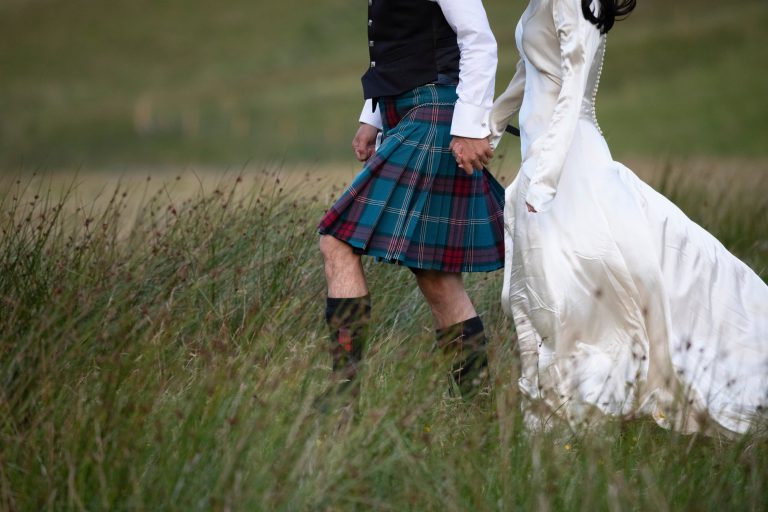
Historic romance, border-town legend and a place where elopement became part of the story. Keep the attire pristine and rooted in tradition.
Current wedding numbers vary depending on the source, but the area still has significant wedding volume. Gretna Green’s visitor information says around 5.000 couples marry in the area every year. A 2024 report from Tie the Knot Scotland described Gretna Green as hosting around 3.500 weddings a year.
The range is worth noting because these are not the same kind of official statistics as Copenhagen or Hawaii. Still, the direction is clear: Gretna Green is more than a historic reference and remains a real wedding destination.
Scotland also has clear paperwork requirements. Official Scottish guidance says that couples living outside the UK may need a certificate from their country confirming there is no legal reason they cannot marry, and if required, it must be provided with the marriage notice at least 29 days before the wedding. That is the interesting tension.
Same-sex couples can marry or enter a civil partnership in Scotland, so the romantic Gretna Green story now sits inside a present-day, inclusive legal framework.
Gretna Green carries the old runaway-wedding fantasy, but today’s couples still need documents, notice periods and planning. The romance of rebellion now has forms attached. For some couples, that is part of the charm. Scotland offers stone, weather, history, literature, winter light, old hotels, whisky, fireplaces and a wedding atmosphere that feels completely different from a beach or city hall.
Best for: historic elopement energy, Scottish romance, winter weddings, small ceremonies and couples who like the runaway-wedding story.
The planning reality: the myth is old, but the paperwork is up-to-date.
The appeal of New Zealand is easy to understand. It offers a wedding shaped by distance, landscape and scale. For couples travelling from abroad, the setting becomes part of the ceremony itself. Queenstown especially has become part of an adventurous wedding imagination, with scenery that can carry a ceremony almost on its own.

Sweeping landscapes, angelic light and a ceremony framed by nature. The landscape becomes the real protagonist on your wedding day.
New Zealand’s numbers show international demand: couples travel there to marry. Stats NZ reported 2.565 overseas-resident couples who married or formed a civil union in New Zealand in 2025, up from 2.418 the year before. It is a measurable sign that New Zealand attracts couples who choose to marry away from home.
There is also a practical side. New Zealand government guidance confirms that visitors can marry or have a civil union in the country, and that same-sex marriage is legal. For international couples, that clarity matters. It makes New Zealand a strong option for a wedding that feels adventurous, inclusive and legally straightforward.
New Zealand invites a wedding that takes time. Couples travel far and choose a landscape that carries meaning. The ceremony is part of a longer stay. The country suits vows held close to nature and its impressive coastlines, lakes and mountains create the wedding.
Best for: couples who want nature, privacy, outdoor ceremony options, and adventure photography.
The planning reality: distance matters. Flights, weather, seasons, location access, celebrants, paperwork, clothing and backup plans all need to be organised before the wedding becomes a mountain daydream.
Some countries are often mentioned as low-red-tape wedding destinations. Georgia, for example, is frequently discussed online as a practical place for foreign couples to marry because the civil process can be relatively straightforward.
Easy paperwork still has to be measured against equal access.
Georgia’s official marriage registration page defines marriage as “a voluntary union of a man and a woman,” and the country has also moved through restrictive anti-LGBTQIA+ legislation in recent years. That means Georgia may be administratively convenient for some heterosexual couples, while being legally unsuitable for same-sex couples. For us, that matters.
The Housewife Wedding Planning System™ is created with inclusive language on purpose. A wedding planner should not quietly pretend that every destination works for every couple. When choosing where to marry, couples need to look at more than speed and bureaucracy. They also need to know whether the place recognises their relationship in the first place.
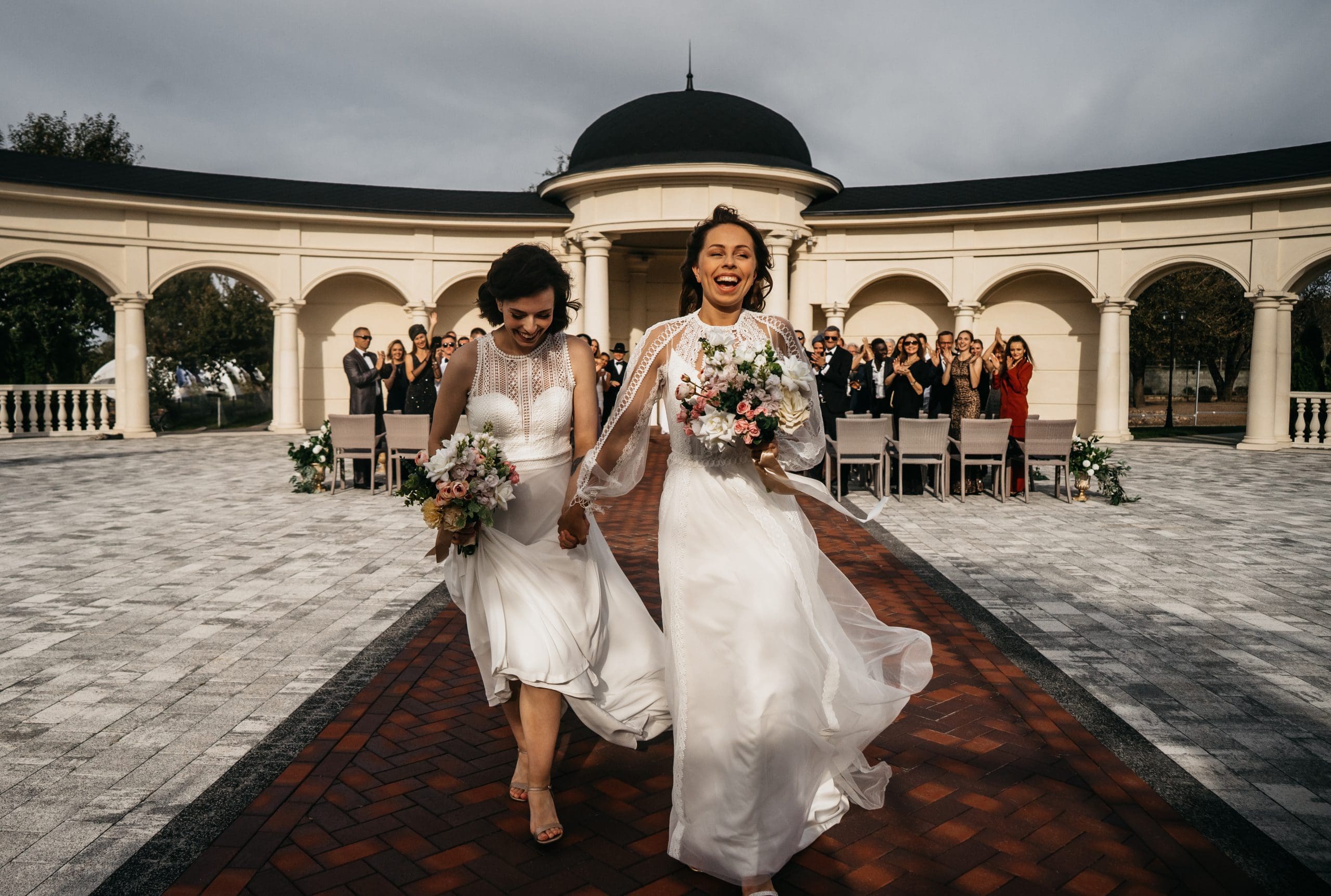
Easy paperwork only matters if the destination legally recognises the couple getting married.
The most interesting aspect is that elopement is not one thing.
Copenhagen reveals the power of a clear legal route for international couples.
Rome shows the pull of romance, food, family and destination wedding culture, with Italy’s wider wedding tourism numbers sitting behind it.
Hawaii represents how strong non-resident wedding travel can be when a destination publishes clear data.
Scotland carries the old elopement myth, which still has commercial and emotional life.
New Zealand conveys how a wedding escape can become a longer journey: landscape, privacy, adventure, official overseas-resident marriage numbers and an inclusive legal framework.
There is more to this than simply asking, “What is the prettiest place to elope?”
The better question is: “What kind of wedding are we actually planning?” Each answer leads to a different type of destination:
• A legal shortcut?
• A city hall ceremony?
• A symbolic ceremony?
• A family destination wedding?
• A religious wedding?
• A dinner-led celebration?
• A travel experience with a ceremony inside it?
Work from one clear system
Keep the mood, budget, guest list, legal details, visual and travel decisions in one place before the wedding starts growing in every direction.
Use the planner, city editions and the app to turn the idea into something you can actually organise.
This article is an introduction. It is here to open up the landscape and help you compare possibilities, while the legal route will always depend on your own circumstances.
The paperwork for marrying abroad is defined by where you are coming from. Your country of origin determines which documents you need, whether they must be translated or apostilled, and how the marriage will be recognised when you return home. Because of that, there is no single answer that works for every couple.
For Copenhagen and Rome, the paperwork process is already built into the city editions of The Housewife Wedding Planner. Each guide takes you through the documents, the timeline and the destination-specific steps, so the legal process becomes part of the planning instead of a last-minute scramble.
For Hawaii, Scotland, and New Zealand, start by contacting the local civil registration authority directly, as early as possible, and ask what is required for a couple from your specific country.